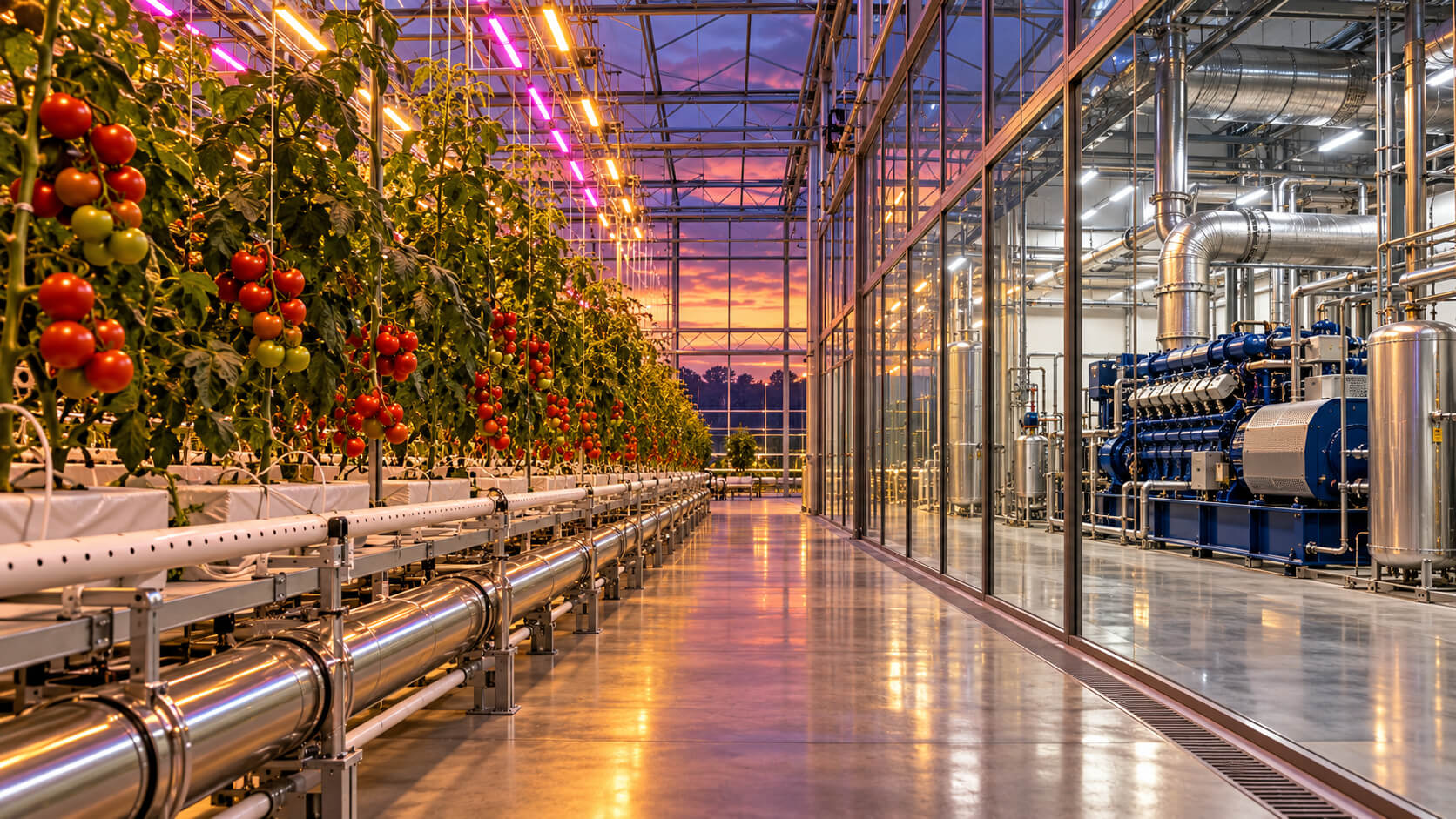
Modern commercial greenhouse operations represent one of the most energy-intensive sectors in controlled-environment agriculture. Maintaining optimal microclimates inside massive glass or polycarbonate structures requires substantial thermal energy to counteract nocturnal heat loss, while supplementary grow lighting, ventilation, and automated fertigation systems drive massive electrical demand. Traditional approaches—relying on grid electricity alongside standalone fossil-fuel boilers—result in volatile operating expenses and compromised crop yields during seasonal extremes.
Implementing CHP for greenhouses transforms this dynamic by decentralizing energy production directly at the growing site. Operating as an on-site greenhouse cogeneration hub, a gas-engine-driven plant simultaneously generates electricity, captures high-grade thermal energy for greenhouse heating, and cleans combustion exhaust to deliver greenhouse CO2 enrichment. This trigeneration capability addresses the primary resource constraints of commercial horticulture within a single fuel-efficient cycle.
Meeting the Continuous Heat Demand of Commercial Horticulture
Thermal regulation is the primary determinant of plant health, vegetative development, and fruit setting:
-
Nocturnal and Seasonal Temperature Control: Greenhouses lose heat rapidly through their envelope during colder nights and winter months. A sudden drop in ambient root-zone temperature stalls plant metabolism and promotes fungal pathogens.
-
Hot Water Heating Networks: A cogeneration system captures waste heat from engine jacket water, lubricating oil, and exhaust gas, transferring it into a closed hot water circuit (typically 80°C to 90°C).
-
Grow-Pipe Distribution: This heated water circulates through network pipelines positioned precisely along crop rows and grow gutters. Placing heat directly beneath the plant canopy warms the root zone and creates gentle upward convective air currents that minimize microclimate stratification.
-
Thermal Buffering for Decoupled Generation: Commercial greenhouse CHP facilities routinely incorporate large vertical thermal storage tanks (heat buffers). Hot water generated during peak daytime electrical operation is stored in the buffer and discharged into the grow pipes during freezing nights, decoupling electrical generation from immediate heating demand.
Driving High-Yield Supplementary Lighting and Automation
Electrification is central to modern year-round horticultural production:
-
Photoperiod Extension via Grow Lights: To sustain continuous harvests of crops like tomatoes, cucumbers, peppers, and cut flowers through autumn and winter, growers rely on High-Pressure Sodium (HPS) or LED grow lights running 12 to 18 hours per day.
-
Peak Tariff Mitigation: Powering hundreds of kilowatts of artificial lighting from the regional electrical grid exposes growers to costly peak-demand tariffs. On-site greenhouse power generation allows operators to produce baseload electricity at a predictable, controlled cost.
-
Powering Ancillary Systems: On-site electrical generation reliably runs climate computer networks, automated shading screens, reverse osmosis water purification plants, and precision drip-irrigation pumps.
CO₂ Utilization: The Definitive Advantage of Horticultural CHP
What distinguishes a greenhouse cogeneration plant from conventional industrial power installations is the direct valorization of combustion exhaust for greenhouse CO2 fertilization.
Carbon dioxide is a fundamental chemical building block of plant photosynthesis. In sealed commercial greenhouses, active plant canopies rapidly deplete ambient carbon dioxide levels down to 200–250 ppm during daylight hours, severely limiting photosynthetic rates. Enriching the greenhouse atmosphere to optimal concentrations (800 to 1,000 ppm) accelerates biomass accumulation, shortens growth cycles, and increases harvest yields by 15% to 30%.
Horticultural CHP systems utilize advanced exhaust purification trains to achieve this safely:
-
Selective Catalytic Reduction (SCR): Exhaust gas leaves the engine and passes through an SCR catalyst where urea or ammonia dosing reduces nitrogen oxides () to harmless nitrogen and water vapor.
-
Oxidation Catalysts: Residual carbon monoxide () and unburned hydrocarbons () are oxidized into pure and water.
-
Gas Safety Monitoring and Distribution: Continuous infrared gas analyzers monitor the cleaned exhaust to verify near-zero levels of ethylene () and , which could otherwise damage crops. Once verified clean and cooled below 50°C, the carbon dioxide is distributed across crop rows via perforated micro-tubing beneath the canopy.
Operating Hours and the Economics of Greenhouse CHP
The economic feasibility of any combined heat and power plant is dictated by annual run hours. In standard industrial settings, high ambient temperatures in summer can suppress heat demand, occasionally leading to reduced engine run hours.
Greenhouse operations avoid this operational bottleneck. Because natural gas engines run during daylight hours to supply supplementary lighting and deliver photosynthetic CO₂, and their thermal output is absorbed directly by the greenhouse or stored in thermal buffers for nocturnal heating, annual operating times regularly reach 5,000 to 7,500 hours. This exceptionally balanced thermal and electrical load profile allows growers to amortize initial capital expenditure rapidly and optimize lifecycle operational costs.
Engineering Horticultural Energy Systems with İltekno
Designing an energy center that balances crop biological cycles with continuous power generation requires specialized engineering precision.
İltekno delivers turnkey on-site greenhouse energy solutions engineered to meet the strict demands of modern commercial agriculture. Utilizing high-efficiency MWM gas engine technology, İltekno integrates advanced exhaust purification catalysts for food-grade CO₂ extraction, high-efficiency heat recovery circuits, and thermal storage integration. From initial electrical load profiling and gas infrastructure modeling to EPC commissioning and round-the-clock maintenance, İltekno provides greenhouse operators with reliable energy resilience, minimized production overhead, and maximized crop productivity.