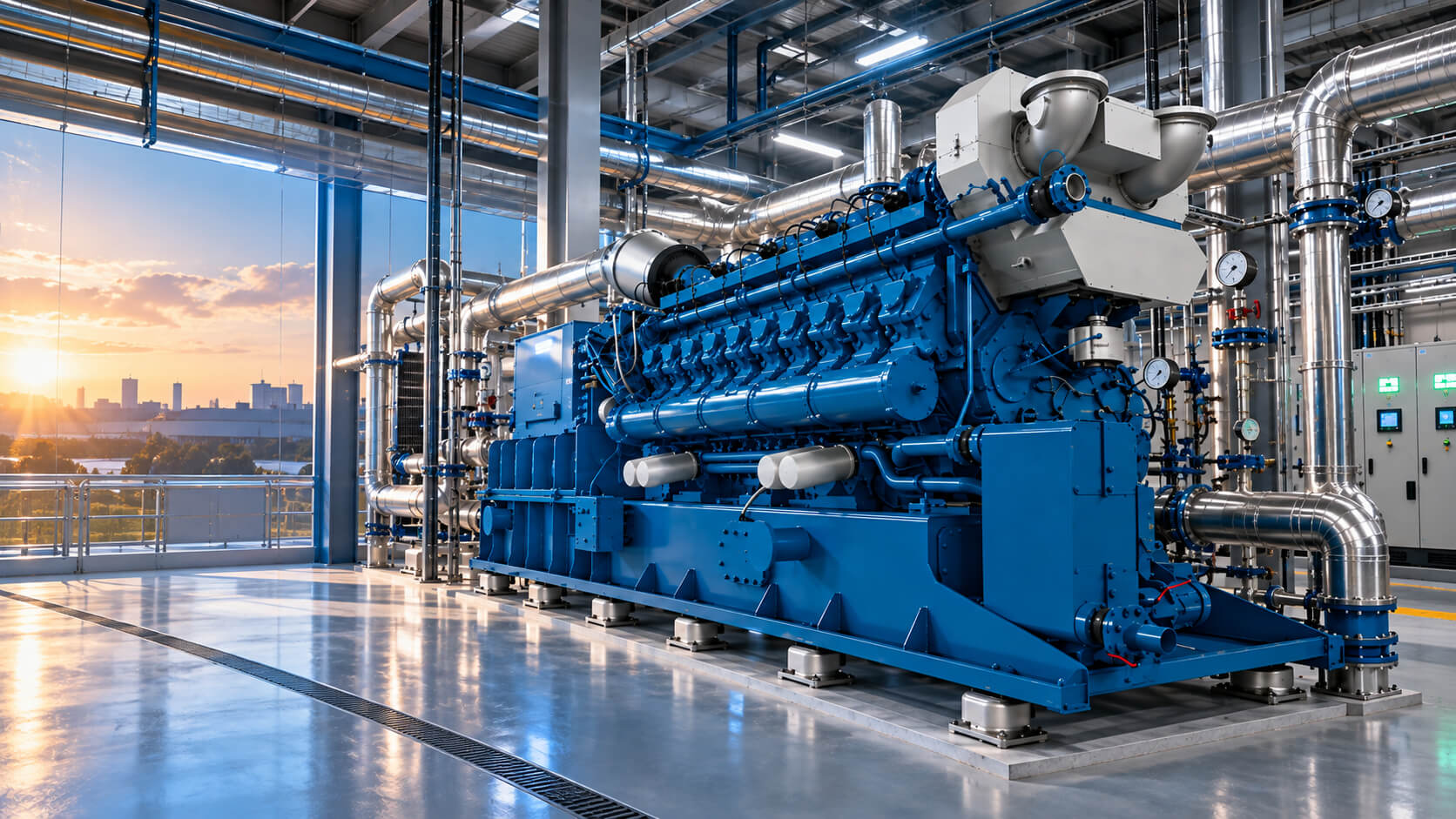
Reciprocating internal combustion engines running on gaseous fuels are the thermodynamic workhorses of modern decentralized generation. Whether deployed in baseline continuous generation, peak shaving, or combined heat and power assets, maximizing gas engine efficiency directly governs project payback and operating expenditure. Because fuel represents up to 70 to 80 percent of a plant's lifecycle operating costs, even a fractional drop in fuel-to-power conversion compounds into significant financial losses over thousands of operating hours.
Achieving peak gas engine performance requires managing complex thermodynamic, mechanical, and chemical parameters. Beyond selecting a high-specification engine, plant operators must understand how ambient conditions, fuel composition, duty profiles, and maintenance practices interact to influence both electrical and thermal conversion rates in an industrial gas engine power plant.
Electrical Efficiency vs. Thermal Efficiency: Defining the Metrics
When assessing natural gas engine efficiency, engineering teams evaluate two primary energy conversion metrics:
-
Electrical Efficiency: The percentage of fuel energy (measured via lower heating value) converted directly into usable electrical power at the generator terminals. Modern industrial lean-burn gas engines typically achieve electrical efficiencies between 42% and 48% under nominal conditions.
-
Thermal Efficiency: The percentage of input fuel energy recovered as usable thermal energy from engine jacket water, lube oil circuits, intercooler stages, and high-temperature exhaust gases.
-
Total Plant Efficiency: In combined heat and power (cogeneration systems), total fuel utilization aggregates both electrical and thermal outputs, frequently exceeding 85% to 90%. However, optimizing the engine core remains the prerequisite for maximizing this total thermodynamic yield.
Key Factors Influencing Gas Engine Efficiency
A variety of operational, environmental, and mechanical variables dictate real-world power generation efficiency.
1. Engine Load Profile and Partial Load Derating
Reciprocating gas engines are thermodynamically engineered to achieve their highest electrical efficiency between 80% and 100% of continuous rated output. Operating consistently at partial load (such as below 50% to 60%) degrades performance:
-
Combustion chamber temperatures drop, leading to incomplete fuel combustion.
-
Pumping losses across the intake and exhaust stroke increase relative to net power output.
-
Parasitic mechanical loads (water pumps, oil pumps, and mechanical friction) consume a larger percentage of total output, driving down electrical efficiency.
2. Fuel Gas Composition and Methane Number
Fuel gas quality directly impacts the combustion process:
-
Methane Number (MN): Represents the fuel's resistance to uncontrolled auto-ignition (engine knock). High variations in methane number, unburned hydrocarbons, or inert gas dilution force the engine management system to retard ignition timing to prevent mechanical damage, which immediately reduces thermodynamic efficiency.
-
Heating Value Stability: Fluctuations in calorific value disrupt air-fuel ratio control, causing combustion instability and unburned fuel losses.
3. Ambient Conditions (Air Temperature, Altitude, and Humidity)
Engine power density relies heavily on-air density inside the combustion chamber:
-
High Ambient Temperatures: Warm air is less dense, reducing mass airflow into the cylinders and lowering thermal transfer rates across intercoolers. To prevent pre-ignition and keep knock margins safe, the engine controller derates electrical output.
-
Altitude Above Sea Level: Lower barometric pressure at high elevations decreases air density intake, requiring specialized turbocharger configurations or operational derating.
4. Charge Air Cooling and Temperature Control
Turbocharged lean-burn engines require efficient two-stage intercooling to compress and cool the intake charge before it enters the cylinders:
-
Lower mixture temperatures increase air density, allowing more fuel to burn efficiently per cycle.
-
Inefficient intercoolers or elevated cooling water temperatures increase intake mixture temperatures, raising knock risk and forcing ignition retardation that reduces fuel efficiency.
5. Combustion Parameters and Ignition Systems
Precise ignition timing is essential for extracting maximum work from the expansion stroke:
-
Advanced pre-chamber spark plugs technology and microprocessor-controlled ignition systems ensure rapid, repeatable flame propagation across ultra-lean air-fuel mixtures.
-
Even minor spark plug wear or ignition timing drift can cause cylinder-to-cylinder imbalances, leading to unburned hydrocarbons and lost mechanical work.
The Role of Predictive Gas Engine Maintenance
Achieving sustained fuel efficiency requires rigorous gas engine maintenance. Mechanical degradation over thousands of operating hours can quietly erode system efficiency:
-
Lubricating Oil Condition: Degraded lube oil increases frictional resistance across cylinder liners, crankshaft journals, and valve trains. Regular oil analysis prevents viscosity degradation and protects against friction-induced efficiency drops.
-
Turbocharger and Valve Maintenance: Soot accumulation on turbocharger turbine blades reduces boost pressure, while valve seat wear alters cylinder breathing dynamics and compression ratios.
-
Heat Exchanger Cleaning: Scaling and fouling in plate and shell-and-tube heat exchangers restrict thermal recovery directly degrading the system's thermal efficiency.
Maximizing Asset Longevity and Performance with İltekno
Sustaining high thermodynamic performance over an engine's 20-year lifespan requires engineering depth across installation, telemetry, and lifecycle servicing.
As an experienced engineering and EPC provider specializing in world-class MWM gas engine technology, İltekno ensures industrial power plants operate at peak thermodynamic efficiency. From detailed site feasibility and fuel gas analysis to turnkey installation and long-term operations and maintenance, İltekno aligns engine configurations with facility load curves. By deploying intelligent control architectures and proactive technical support, İltekno protects power output, minimizes fuel consumption, and delivers reliable lifecycle profitability.